
Table of Contents
Navigating Back Pain After Surgery in Arlington Heights
Experiencing back pain after surgery in Arlington Heights can be incredibly frustrating, especially when you expected relief following the procedure. Many patients in our community face persistent postoperative discomfort in the Arlington Heights area, wondering if this is a normal part of recovery or a sign of something more serious. At Advanced Pain & Spine Management, we understand this challenge and are here to help distinguish between typical healing and potential complications.
Up to 80% of patients experience some post-surgical pain, as noted by the Cleveland Clinic, often due to inflammation, muscle strain, or the body’s natural healing processes. In the weeks following surgery, mild to moderate discomfort is common, but if pain intensifies or lingers beyond three to six months, it may indicate abnormal issues like nerve irritation or scar tissue formation. This could even signal failed back surgery syndrome in Arlington Heights, where ongoing spinal issues following surgery near Arlington Heights disrupt daily life. Our board-certified specialists, including Dr. George Macrinici, emphasize early intervention through comprehensive assessments to improve your quality of life and prevent chronic problems.
We offer post-surgical back pain treatment options in Arlington Heights, including minimally invasive approaches like spinal cord stimulation and sacroiliac joint fusion. With convenient locations in Arlington Heights and Bloomingdale, our team creates individualized pain treatment plans tailored to your needs. In the following sections, explore common causes, effective treatments, and when to seek our expert care for lasting relief.
Understanding Causes of Persistent Back Pain After Surgery
Persistent back pain after surgery can stem from various factors beyond normal recovery, affecting many patients in the Arlington Heights area. We at Advanced Pain & Spine Management often see individuals grappling with this issue, distinguishing routine healing from more serious complications. Understanding these causes empowers patients to seek timely intervention, potentially improving their quality of life through targeted diagnostics and treatments.
Common Surgical Complications Leading to Ongoing Pain
Common surgical complications refer to immediate post-operative issues that hinder recovery and prolong discomfort following spinal procedures. These arise from the body’s response to trauma or procedural elements, leading to inflammation, infection, or mechanical irritations that manifest as persistent pain. In clinical terms, such complications occur in up to 40% of cases, as noted in studies on post-laminectomy outcomes from the American Academy of Physical Medicine and Rehabilitation (AAPMR).
Key examples include epidural fibrosis, where scar tissue forms around the spinal nerves, causing adhesions akin to internal scar buildup that restricts movement and irritates nerves. Recurrent disc herniation happens when the repaired disc re-bulges, pressing on nerves and triggering sharp pain. Hardware irritation from screws or rods can also provoke localized inflammation, especially if there’s subtle misalignment. Additionally, inadequate pain control post-surgery contributes; the Mayo Clinic highlights that opioids provide short-term relief but often fail long-term, with efficacy dropping after weeks due to tolerance, underscoring the need for multimodal approaches.
In the Arlington Heights region, these complications from spinal procedures affect local patients similarly, with higher risks in those with pre-existing conditions. We recommend early monitoring to catch back pain after surgery in Arlington Heights before it escalates.
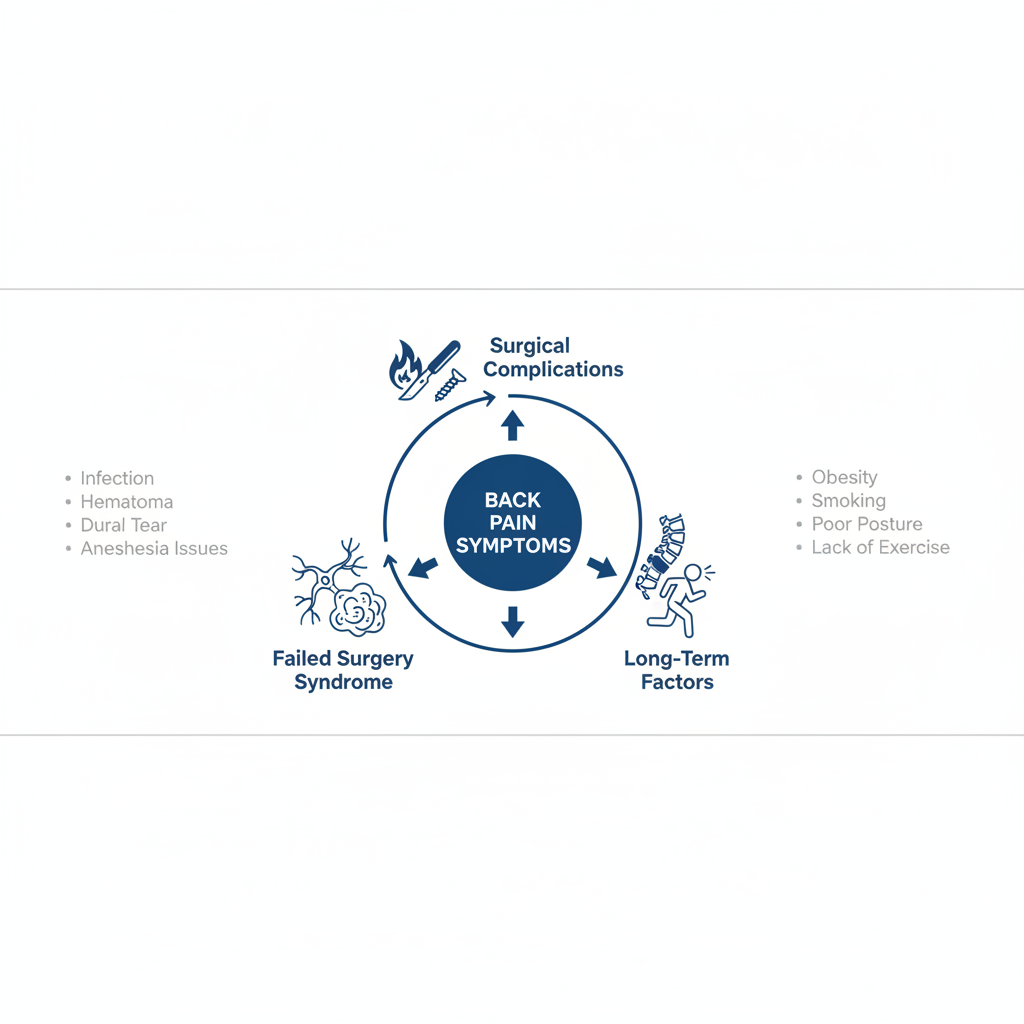
Visual guide to post-surgical back pain causes
This infographic illustrates how these immediate issues interconnect, helping patients visualize pathways to relief. Transitioning from acute complications, recognizing patterns like unrelenting pain signals the potential for more entrenched problems, such as failed back surgery syndrome.
Identifying Failed Back Surgery Syndrome
Failed back surgery syndrome (FBSS) in Arlington Heights describes chronic pain persisting or recurring after spinal surgery, despite no evident surgical error. It encompasses a spectrum of neuropathic and structural issues, with incidence rates of 10-40% per AAPMR data on post-laminectomy pain. Symptoms include radiating leg pain, numbness, weakness, and reduced mobility, often worsening with activity.
Diagnostic criteria involve comprehensive assessments: persistent axial or radicular pain beyond three months post-op, confirmed via MRI for scar tissue or nerve compression, and EMG for nerve damage. Scar tissue formation, or epidural fibrosis, entraps nerves like tangled wires, while incomplete decompression leaves residual pressure. Risk factors such as obesity, smoking, or psychological stressors amplify vulnerability, as preoperative anxiety can heighten pain perception.
Locally, failed back surgery syndrome in Arlington Heights prompts many to explore revisions; for instance, sacroiliac joint fusion surgery may address related instability in select failed cases. We guide patients through these evaluations to pinpoint sources accurately.
Long-Term Factors in Postoperative Discomfort
Long-term factors in postoperative discomfort involve delayed-onset issues that evolve months or years after surgery, contributing to chronic pain following lumbar surgery locally. These include degenerative changes and behavioral influences that erode initial surgical gains, affecting up to 30% of patients per epidemiological insights.
Adjacent segment disease occurs when surgery alters biomechanics, stressing neighboring vertebrae and causing new herniations or instability. Lifestyle elements like sedentary habits or poor ergonomics exacerbate this, while ongoing smoking impairs tissue healing. Psychosocial factors, including untreated depression, can perpetuate pain cycles, as noted in FBSS pathophysiology.
In Arlington Heights, these factors influence recovery trajectories, with obesity rates mirroring national trends that heighten risks. Exploring post-surgical back pain treatment options in Arlington Heights, such as our interventional therapies, can mitigate these through personalized plans, leading to better long-term management and reduced discomfort.
Benefits of Specialized Pain Management Post-Surgery
At Advanced Pain & Spine Management, we recognize the challenges of back pain after surgery in Arlington Heights. Our specialized approaches deliver significant advantages, including faster recovery and improved daily function through evidence-based interventions. These strategies not only address immediate discomfort but also promote long-term wellness for patients navigating post-operative recovery.
Improved Quality of Life Through Targeted Interventions
Specialized pain management enhances daily functioning for individuals experiencing back pain after surgery in Arlington Heights by focusing on minimally invasive treatments that reduce discomfort and restore mobility. We offer procedures like radiofrequency ablation and epidural injections, which target pain sources directly, leading to better sleep, increased activity levels, and fewer complications compared to traditional methods. Patients often report enhanced emotional well-being as persistent pain diminishes, allowing them to engage in family activities and return to work sooner.
Evidence from multimodal pain control, as outlined by the Cleveland Clinic, supports these gains, showing reduced hospital stays and lower risks of issues like blood clots through comprehensive strategies that combine interventions with non-medication techniques such as physical therapy. Our team’s expertise in back pain causes and treatment ensures therapies address underlying issues like sciatica, with success rates exceeding 70% in restoring function based on clinical guidelines. This approach aligns with referral recommendations from the American Academy of Pain Medicine, emphasizing specialist intervention for chronic post-op symptoms to prevent long-term physical and psychological complications.
Consider a patient like John, a local resident who, after spinal surgery, struggled with limited mobility. Through our targeted radiofrequency ablation, he regained the ability to walk his dog daily within weeks, transforming his routine and outlook.
Reduced Reliance on Medications with Advanced Procedures
Our post-surgical back pain treatment options in Arlington Heights prioritize advanced procedures to minimize opioid use, offering safer alternatives for sustained relief. Techniques such as spinal cord stimulation and lumbar epidural steroid injections provide effective pain control without the dependency risks associated with long-term medications, promoting faster healing and reducing side effects like nausea or addiction.
Drawing from Cleveland Clinic insights, effective pain management accelerates recovery by mitigating complications from opioids, including overdose risks and withdrawal, while non-medication options like dorsal root ganglion stimulation further decrease reliance on drugs. We integrate these with our pain medication management services, following AAPM guidelines that advocate specialist referrals for cases unresponsive to standard treatments, resulting in improved outcomes and cost savings from outpatient settings that avoid extended hospital stays.
For instance, Sarah, post-lumbar decompression, transitioned from daily opioids to targeted injections at our clinic, experiencing minimal side effects and renewed energy for her active lifestyle.
Personalized Care from Local Experts
In Arlington Heights, our board-certified specialists craft individualized pain treatment plans for conditions including failed back surgery syndrome in Arlington Heights, ensuring tailored strategies that optimize long-term relief and accessibility. We collaborate with patients to customize therapies like intrathecal pain pumps or facet joint injections, addressing unique needs such as neuropathic pain or spinal stenosis for comprehensive recovery.
The AAPM highlights the value of multidisciplinary specialist care, noting better management of chronic pain through coordinated interventions that reduce psychological comorbidities like anxiety. Cleveland Clinic data reinforces how personalized multimodal approaches enhance mobility and sleep, with our local expertise enabling prompt referrals and follow-ups that shorten recovery timelines. This gains from specialist intervention after spinal procedures locally emphasize evidence-based success, with high patient satisfaction from our convenient Arlington Heights location.
Take Maria, who faced ongoing sciatica after surgery; our customized plan with sacroiliac joint injections alleviated her symptoms, allowing pain-free community involvement. Results may vary; this information is educational and not a substitute for professional medical advice–consult a healthcare professional.
How Advanced Treatments Address Post-Surgical Back Pain
At Advanced Pain & Spine Management, we specialize in addressing back pain after surgery in Arlington Heights through innovative, minimally invasive procedures. These advanced treatments target the underlying mechanisms of postoperative discomfort, such as neuropathic pain and inflammation, providing relief for patients experiencing persistent symptoms. Our individualized pain treatment plans integrate evidence-based options to improve quality of life, drawing on multidisciplinary approaches that combine interventional techniques with supportive therapies.
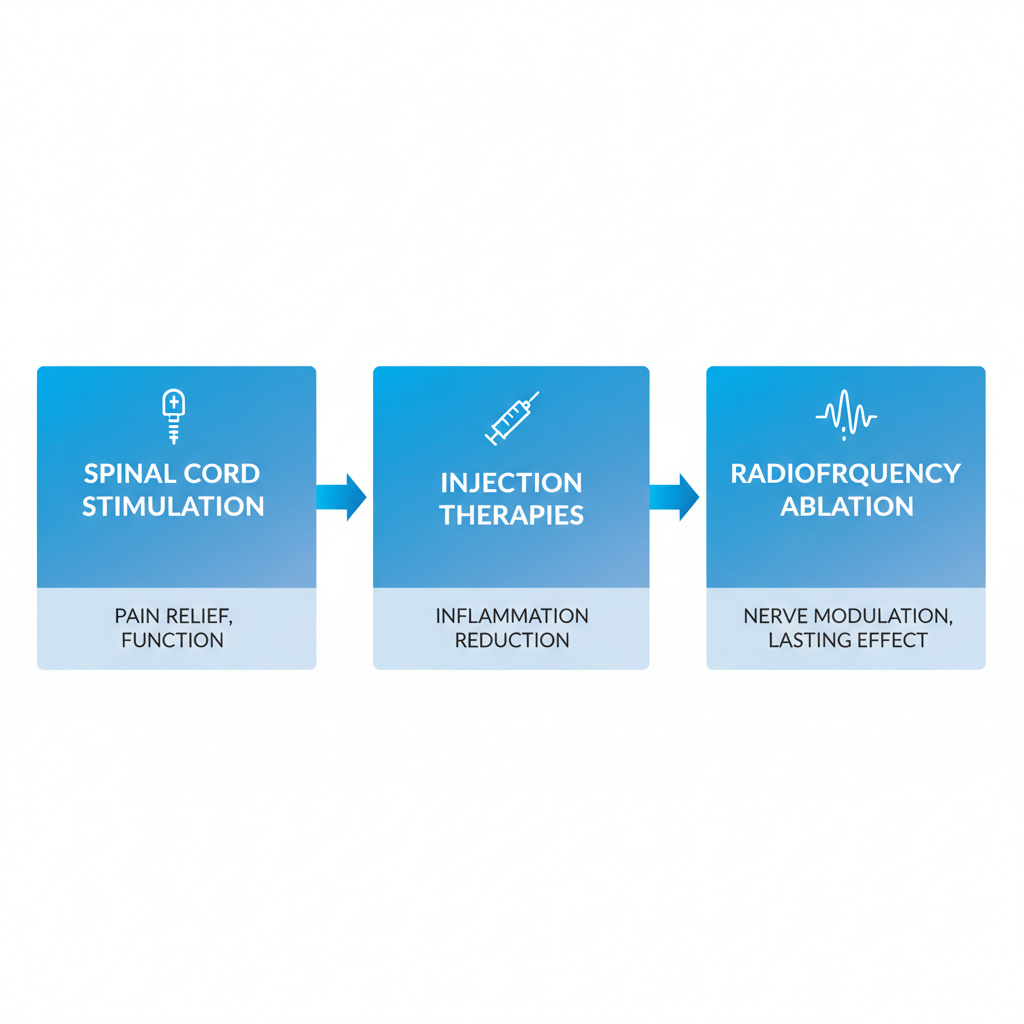
Advanced treatment process for managing post-surgical back pain.
This overview highlights how these methods interrupt pain pathways effectively, helping patients in the Arlington Heights area regain mobility and reduce reliance on medications. By focusing on local mechanisms of interventional relief post-surgery in Arlington Heights, we empower informed decisions about care.
Role of Spinal Cord Stimulation in Pain Relief
Spinal cord stimulation (SCS) plays a crucial role in managing back pain after spinal surgery by delivering low-level electrical impulses to the spinal cord, which disrupt pain signals before they reach the brain. This neuromodulation technique masks neuropathic pain associated with conditions like failed back surgery syndrome, altering the brain’s perception without addressing the source directly. At our clinic, we utilize advanced SCS systems, including dorsal root ganglion stimulation for complex cases, to provide targeted relief.
The implantation process begins with a trial phase where a temporary lead is placed near the spine under local anesthesia. If successful, we proceed to permanent implantation via a minimally invasive procedure, typically lasting 1-2 hours, followed by programming the device to optimize settings. Patients receive guidance on device management post-procedure.
Outcomes show significant pain reduction in 50-70% of suitable candidates, per studies on post-laminectomy pain, enhancing daily function and often integrating with physical therapy for sustained benefits. This approach supports long-term management without additional surgery.
Injection Therapies for Targeted Symptom Control
Injection therapies, such as epidural steroid injections, effectively control post-surgical back pain in the Arlington Heights area by delivering anti-inflammatory corticosteroids directly to inflamed nerve roots or spinal structures. These procedures reduce swelling and interrupt inflammatory pain pathways, offering localized relief for radicular or axial symptoms that persist after surgery. We prioritize safety profiles, aligning with guidelines that report success rates of 60-80% for short-term alleviation in epidural applications.
The process involves imaging-guided needle placement into the epidural space or facet joints, injecting a steroid-anesthetic mixture in an outpatient setting. Preparation includes a medical review for contraindications, with the procedure taking about 30 minutes; patients can resume light activities soon after.
Patients often experience reduced pain and improved mobility within days, lasting several months, which facilitates engagement in rehabilitation. This targeted method complements our post-surgical back pain treatment options in Arlington Heights, minimizing systemic side effects.
Radiofrequency Ablation and Other Minimally Invasive Methods
Radiofrequency ablation (RFA) addresses persistent back pain by using heat generated from radio waves to disrupt nerve signals transmitting pain from the spine, particularly beneficial for chronic lower back pain in failed back surgery syndrome in Arlington Heights. This denervation technique targets sensory nerves around facet joints or sacroiliac areas, providing prolonged relief by preventing pain impulses from reaching the brain while preserving motor function.
We begin with diagnostic nerve blocks to confirm targets, followed by RFA where a needle electrode delivers controlled heat for 60-90 seconds per site. The minimally invasive procedure, done under fluoroscopy, lasts 45-60 minutes in our Arlington Heights facility, with minimal downtime.
Studies indicate 70-80% of patients achieve at least 50% pain reduction for 6-12 months or longer, reducing medication needs and supporting physical therapy integration. These methods exemplify how procedures target postoperative spinal pain locally, promoting customized care at Advanced Pain & Spine Management.
Note: This information is educational and not a substitute for professional medical advice; consult our team for personalized evaluation.
Best Practices for Managing Back Pain After Surgery in Arlington Heights
Effective recovery from back surgery requires a structured approach to pain management and rehabilitation. At Advanced Pain & Spine Management, we emphasize evidence-based strategies tailored to patients in Arlington Heights and the 60004 area. These practices help minimize discomfort, promote healing, and reduce the risk of complications like failed back surgery syndrome in Arlington Heights.
Incorporating Physical Therapy and Lifestyle Adjustments
Physical therapy plays a crucial role in addressing back pain after surgery in Arlington Heights, focusing on restoring mobility and strength while preventing re-injury. We coordinate rehab techniques post-spinal surgery in the local area through our occupational therapy programs, which include gentle core-strengthening exercises such as pelvic tilts and partial crunches. These activities, supported by guidelines from the Cleveland Clinic, target muscle support around the spine to enhance stability and reduce strain during daily activities.
To implement these adjustments, start with 10-15 minute sessions three times weekly under professional guidance, gradually increasing intensity as tolerated. Incorporate ergonomic changes like using lumbar supports when sitting and maintaining neutral spine alignment during lifts.
- Maintain a balanced diet rich in anti-inflammatory foods to support tissue healing.
- Avoid high-impact activities for the first 6-8 weeks post-surgery.
- Track progress in a journal to discuss with your therapist.
This structured routine fosters long-term relief and independence.
Monitoring Symptoms and Seeking Timely Interventions
Vigilant monitoring of symptoms is essential for effective strategies for postoperative pain control in Arlington Heights, allowing early detection of issues that could lead to failed back surgery syndrome in Arlington Heights. According to the American Academy of Pain Medicine, referral to a pain specialist is warranted when pain persists despite standard care or involves numbness, weakness, or bowel/bladder changes–red flags signaling potential nerve involvement or infection.
We advise daily self-assessments: note pain levels on a 0-10 scale, observe for swelling or fever, and report unrelieved discomfort after 48 hours. For post-surgical back pain treatment options in Arlington Heights, pursue timely interventions like minimally invasive procedures when conservative measures fall short.
- Seek immediate care for severe, worsening pain or neurological deficits.
- Schedule follow-ups within 1-2 weeks post-surgery to adjust plans.
- Discuss lower back pain management strategies with our team for personalized monitoring.
Prompt action ensures optimal outcomes and prevents escalation.
Integrating Multidisciplinary Care Approaches
A multidisciplinary approach combines physical therapy, medications, and procedural interventions for comprehensive post-surgical recovery in Arlington Heights. At Advanced Pain & Spine Management, we develop individualized pain treatment plans that integrate these elements, drawing on Cleveland Clinic protocols to taper opioids safely while incorporating NSAIDs or topical anesthetics for inflammation control. This holistic method addresses pain from multiple angles, enhancing healing and function.
Implementation involves weekly team consultations: our specialists, including Dr. George Macrinici and Jason McAloon, DO, review progress and adjust therapies like epidural injections or radiofrequency ablation as needed. Coordinate with nutritionists for bone-healthy supplements to bolster recovery.
- Communicate openly with providers about medication side effects like nausea.
- Participate in group support sessions for emotional resilience.
- Reassess goals every four weeks to refine the care plan.
This collaborative framework supports sustained relief and quality of life.
Taking Next Steps for Relief from Post-Surgical Back Pain
In managing back pain after surgery in Arlington Heights, understanding the difference between normal postoperative discomfort and persistent issues is crucial for effective recovery. Normal pain typically diminishes within weeks, while ongoing symptoms may signal complications like failed back surgery syndrome in Arlington Heights, warranting prompt evaluation. We at Advanced Pain & Spine Management emphasize early specialist involvement to distinguish these and explore post-surgical back pain treatment options in Arlington Heights, such as physical therapy and medication adjustments. As outlined by the American Academy of Physical Medicine and Rehabilitation, holistic strategies including psychological support enhance outcomes in post-laminectomy scenarios.
For a summary of recovery strategies for postoperative pain in Arlington Heights, consider advanced interventions like our intrathecal pain pumps, which deliver targeted relief when standard approaches fall short. If concerns persist, seeking a second opinion in the 60004 area through trusted providers like us can clarify next steps and refine your plan. We invite you to contact Advanced Pain & Spine Management in Arlington Heights today to discuss individualized pain treatment plans, including back pain treatment options tailored to your needs, such as minimally invasive procedures and comprehensive medication management per Mayo Clinic guidelines–starting with the lowest effective doses to minimize risks like drowsiness.
With our expertise in customized care, we are committed to helping you achieve meaningful relief and improved quality of life. Remember, results may vary, and this information is educational; consult our professionals for personalized advice.
Resources
Arlington Heights
IL
60005