
Table of Contents
Understanding Back Pain Injections in Arlington Heights
Back pain affects millions in Illinois, with chronic conditions like sciatica and spinal stenosis impacting daily life for many adults and seniors. At Advanced Pain & Spine Management, back pain injections in Arlington Heights, Illinois, offer a vital nonsurgical solution to alleviate discomfort and restore mobility without invasive surgery.
Back pain injections deliver targeted therapies directly to inflamed areas, reducing inflammation and interrupting pain signals effectively. Common types available at our convenient locations in Arlington Heights and Bloomingdale include back pain treatment options such as epidural steroid injections in Arlington Heights for broad lumbar relief and transforaminal epidural injections in Arlington Heights to pinpoint nerve root issues. Our board-certified specialists, led by Dr. George Macrinici, coordinate these minimally invasive procedures with physical therapy for holistic, individualized pain management. Drawing from established guidelines on spinal procedures, these injections demonstrate high efficacy in treating radicular pain from disc herniation or stenosis, minimizing risks through precise techniques.
These targeted back pain therapies in Arlington Heights differ in their approach: epidural steroid injections provide widespread anti-inflammatory effects along the spinal canal, while transforaminal injections focus on specific nerve roots for more precise delivery. Facet joint injections, meanwhile, target joint inflammation directly. The following table outlines key distinctions:
| Injection Type | Primary Target | Best For |
|---|---|---|
| Epidural Steroid | Epidural Space | Broad Lumbar Relief |
| Transforaminal | Specific Nerve Root | Localized Sciatica |
| Facet Joint | Spinal Joints | Arthritic Back Pain |
At Advanced Pain & Spine Management, we select the appropriate local spinal injection options based on a thorough evaluation of your symptoms, imaging, and medical history to ensure the best outcomes tailored to your needs.
Patients often experience rapid relief from these evidence-based treatments, enabling a return to normal activities with coordinated nonsurgical care. This guide further explores procedure details, preparation, and recovery to empower you in managing back pain effectively.
Fundamentals of Back Pain Injections
At Advanced Pain & Spine Management, we specialize in back pain injections in Arlington Heights, Illinois, to help patients manage chronic discomfort effectively. These minimally invasive procedures target inflammation, a key contributor to conditions like sciatica and spinal stenosis, offering targeted relief without extensive surgery.
The spine’s anatomy plays a central role in back pain. It consists of vertebrae, discs, and nerves running through the spinal canal. When inflammation occurs–often from herniated discs or arthritis–it compresses nerves in the epidural space, the area surrounding the spinal cord. This pressure sends pain signals radiating down the legs, mimicking a balloon inflating around a delicate wire. Our team explains this to patients during consultations, using simple diagrams to illustrate how swelling disrupts normal function and why anti-inflammatory back treatments become essential for restoring mobility.
Epidural steroid injections in Arlington Heights deliver corticosteroids directly into the epidural space, a procedure we perform with precision to address root causes. The mechanism involves the steroid mimicking the body’s natural anti-inflammatory hormones, binding to receptors on inflamed tissues. This reduces swelling around irritated nerves, interrupting the pain signal pathway to the brain. Imagine deflating that balloon: the nerve regains space, easing pressure and allowing natural healing processes to begin. We follow an algorithmic approach, as outlined by the American Society of Interventional Pain Physicians, starting with patient history review, physical exams, and imaging like MRI to confirm inflammation sites. The injection uses fluoroscopic guidance for accurate needle placement, ensuring the medication reaches the exact location. This targeted delivery not only blocks chemical mediators of pain but also stabilizes cell membranes, providing prolonged relief compared to broader therapies. For chronic cases, this steroid-based spinal therapy can interrupt the cycle of inflammation, supporting physical therapy integration for sustained benefits.
These injections prove effective for sciatica, with studies showing up to 70% of patients experiencing significant relief within weeks, aligning with our clinic’s outcomes. We select candidates based on conservative treatment failures, pain duration over six weeks, and diagnostic imaging prerequisites. Risks are minimal but include temporary soreness at the injection site, headache from spinal fluid leakage, or rare infections. We mitigate these through sterile protocols and post-procedure monitoring. For joint-related pain, alternatives like facet joint injection may complement care.
- Temporary increase in pain or flushing
- Allergic reactions to the steroid (uncommon)
- Infection risk, less than 0.1% with proper technique
- Rare nerve damage from improper placement
Epidural steroid injections offer advantages over oral alternatives, particularly for localized back pain, by providing direct delivery to the affected area, minimizing systemic exposure. This precision suits patients seeking longer-lasting relief without the broader impacts of pills.
| Feature | Epidural Steroid Injection | Oral Steroids |
|---|---|---|
| Delivery Method | Targeted Local Injection | Systemic (Pill) |
| Relief Duration | 3-6 Months | Short-term (Days) |
| Systemic Side Effects | Minimal | High |
As the table illustrates, epidural options excel in chronic scenarios by extending relief and limiting side effects, making them ideal for ongoing management. Drawing from evidence-based algorithms, we prioritize this method for its efficacy in reducing nerve compression without unnecessary medication spread. Patients with persistent sciatica often report improved daily function post-injection, transitioning smoothly to rehabilitation.
Following the comparison, our approach ensures comprehensive evaluation before proceeding. We assess eligibility per guidelines, documenting pain patterns and prior therapies to justify medical necessity. This structured protocol enhances safety and outcomes.
At our Arlington Heights clinic, specialists like Dr. Jason McAloon administer these injections with expertise, tailoring plans to individual needs. We prioritize safety through algorithmic checklists, ensuring every step–from consent to follow-up–upholds high standards. This commitment positions us as a reliable partner in your pain relief journey, focusing on sustainable management.
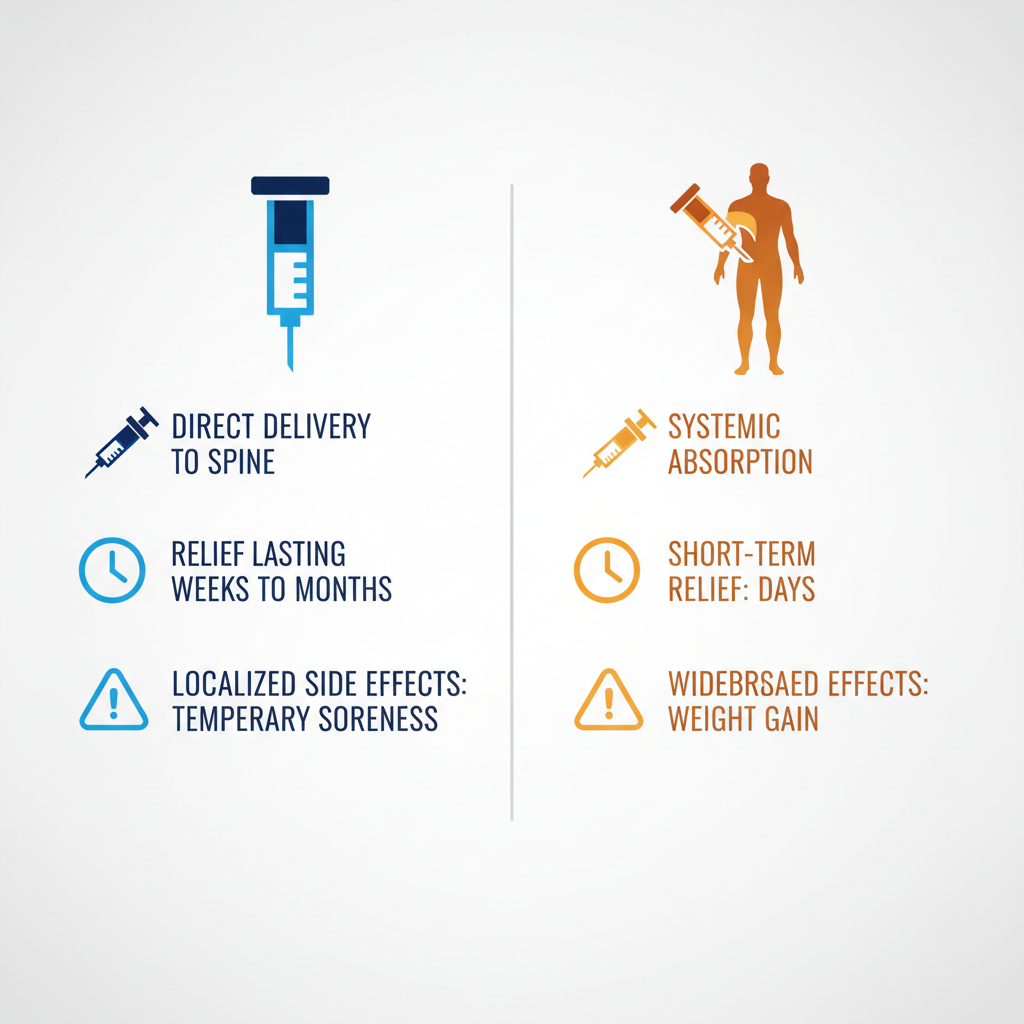
Comparison of epidural and oral steroid treatments for back pain relief.
Building on these fundamentals, patients benefit from our integrated care model, where injections serve as a bridge to fuller recovery.
Exploring Epidural and Transforaminal Injections
At Advanced Pain & Spine Management, we specialize in minimally invasive treatments for chronic back pain, including back pain injections in Arlington Heights, Illinois. These procedures, such as epidural steroid injections and transforaminal approaches, target inflammation around spinal nerves to provide significant relief for conditions like sciatica and herniated discs. Our team, led by board-certified specialists, uses advanced imaging to ensure precision and safety, adhering to FDA guidelines on corticosteroid use for optimal patient outcomes.
Epidural Steroid Injection Techniques
Epidural steroid injections in Arlington Heights deliver anti-inflammatory medication directly into the epidural space surrounding the spinal cord, offering targeted relief for radiating back pain. We commonly perform lumbar approaches for lower back issues and cervical techniques for neck-related discomfort, tailoring each procedure to the patient’s specific anatomy and symptoms. These precision spinal steroid therapies help reduce nerve irritation, promoting mobility and daily function without invasive surgery.
The process begins with a thorough consultation to review medical history and imaging results. Patients are positioned prone or seated, depending on the spinal level, to access the target area comfortably. We administer local anesthesia to numb the skin and deeper tissues, minimizing discomfort throughout.
- Using fluoroscopy, our providers guide a needle to the epidural space, confirming placement with contrast dye for accuracy.
- The corticosteroid, often combined with a local anesthetic, is slowly injected to bathe the inflamed nerves.
- The procedure typically lasts 15-30 minutes, allowing most patients to return home the same day.
Costs for these sessions range from $500 to $1,500, depending on the approach and facility fees, with many Illinois plans like Medicare, Medicaid, and private insurance covering a significant portion for qualifying conditions. Relief often begins within days to weeks and lasts 3-6 months, influenced by factors such as injury severity and lifestyle adjustments.
To provide a clear overview of epidural variations, the following table outlines key approaches we offer:
| Approach | Entry Point | Main Indication |
|---|---|---|
| Interlaminar | Between Vertebrae | Multi-level Disc Disease |
| Caudal | Tailbone (Sacral Hiatus) | Post-Surgical Scarring |
| Transforaminal | Nerve Root Foramen | Lumbar Stenosis/Sciatica |
Interlaminar and caudal methods suit general inflammation, while transforaminal excels in precision. For patients with spinal stenosis, we often recommend transforaminal due to its focused delivery, which aligns with our commitment to individualized pain treatment plans.
Transforaminal Injection Specifics
Transforaminal epidural injections in Arlington Heights focus on specific nerve roots exiting the spine, making them a cornerstone of nerve-targeted pain relief methods for conditions like spinal stenosis and foraminal narrowing. Unlike standard epidurals that distribute medication more broadly, this approach delivers the steroid directly to the affected foramen, enhancing efficacy for unilateral symptoms such as leg pain from sciatica.
Candidates include those with confirmed nerve compression via MRI, where conservative therapies have failed. We highlight the benefits for stenosis patients, as the targeted nature reduces inflammation at the exact pain source, potentially avoiding escalation to surgery. Our clinic employs advanced fluoroscopy and live X-ray guidance to navigate safely around bony structures.
The procedure mirrors epidural steps but emphasizes angular needle placement for root-level access. This method’s precision stems from FDA-informed safety considerations, including careful corticosteroid dosing to minimize neurologic risks, as outlined in expert working group guidelines.
Key differences include faster relief and higher success rates for radicular pain. In our practice, these injections integrate seamlessly with comprehensive plans, supporting long-term management.
The table below compares transforaminal injections to standard epidurals based on clinical metrics:
| Metric | Transforaminal | Standard Interlaminar |
|---|---|---|
| Precision | High (Root Level) | Medium (Regional) |
| Success Rate (Sciatica) | Approx. 75-80% | Approx. 60-70% |
| Recovery Time | 24-48 Hours | 24-48 Hours |
Transforaminal options provide quicker and more sustained benefits, particularly for stenosis, with safety data reinforcing our protocols to prevent adverse events through monitored administration.
Post-Procedure Monitoring
Following epidural or transforaminal procedures at our Arlington Heights facility, we prioritize immediate aftercare to support recovery and maximize results. Patients rest briefly in our recovery area, where we monitor vital signs and assess for any rare side effects like temporary numbness or headache, in line with FDA recommendations for post-injection observation.
Relief onset varies: some notice reduced pain within hours from the anesthetic, while steroid effects build over 1-3 days, peaking at 1-2 weeks. We advise avoiding strenuous activity for 24-48 hours, using ice for soreness, and tracking symptoms in a journal. Full benefits, lasting 3-6 months on average, depend on adherence to follow-up therapies like physical coordination we provide.
Schedule a follow-up visit 2-4 weeks post-procedure to evaluate progress and adjust plans. Insurance in Illinois typically covers these, but we assist with pre-authorizations to ease access. For related concerns, such as joint involvement, options like knee joint injections complement spinal care.
Our approach ensures customized care, with results varying by individual–consult our team for personalized advice. This monitoring reinforces patient safety and empowers informed decisions for ongoing relief.
Practical Guide to Injection Procedures
At Advanced Pain & Spine Management, we guide you through back pain injections in Arlington Heights, Illinois, with a focus on transforaminal and epidural steroid injections. These minimally invasive procedures offer targeted relief for conditions like spinal stenosis and disc herniation, helping patients regain comfort without extensive surgery. Our team, led by experienced specialists, prioritizes your safety and understanding throughout the process.
Preparing for Your Back Pain Injection
We begin every treatment journey with thorough preparation to ensure optimal outcomes and minimize risks. A key step involves a detailed consultation where we review your medical history, symptoms, and previous conservative therapies like physical therapy or medications. Candidates typically include those who have failed non-invasive options and show no contraindications, such as active infections or bleeding disorders, especially in cases of lumbar stenosis where neurogenic claudication persists.
Prior imaging, such as an MRI, is essential to pinpoint the exact source of your pain, whether it’s foraminal narrowing or disc issues. We coordinate this seamlessly at our Arlington Heights office, often allowing same-day procedures for eligible patients.
The following table outlines the core preparation steps:
| Step | Action Required | Timing |
|---|---|---|
| Imaging Review | Confirm Target via MRI/CT | Pre-Procedure |
| Medication Check | Discuss Blood Thinners | 7-10 Days Prior |
| Fasting | No Food (if Sedated) | 6 Hours Prior |
This structured preparation underscores the importance of aligning clinical evaluation with imaging to confirm candidacy and tailor the approach. By addressing these elements upfront, we enhance procedure accuracy and reduce potential complications, setting the stage for effective pain management.
Thorough prep also eases anxieties, allowing you to arrive informed and relaxed. Our staff provides clear instructions on fasting if sedation is planned, and we discuss any allergies to anesthetics or steroids.
During the Procedure: What to Expect
On procedure day at our Arlington Heights location, we create a calm environment for your transforaminal epidural injections in Arlington Heights or interlaminar epidural. You’ll start by changing into a gown and positioning prone on the table, which helps access the lumbar spine comfortably. Mild sedation options, like oral relaxants, are available if needed, though many patients opt for local anesthetic alone to maintain awareness.
The process, lasting 15 to 30 minutes, follows a precise sequence under fluoroscopic guidance for accuracy. First, we clean and numm the skin with a local anesthetic, which may cause a brief stinging sensation. Next, a thin needle is advanced to the targeted epidural space–transforaminal for foraminal approaches targeting nerve roots, or interlaminar midline for broader coverage. Contrast dye confirms placement, followed by injecting a corticosteroid and anesthetic mixture to reduce inflammation and interrupt pain signals.
Here’s an illustrated overview:
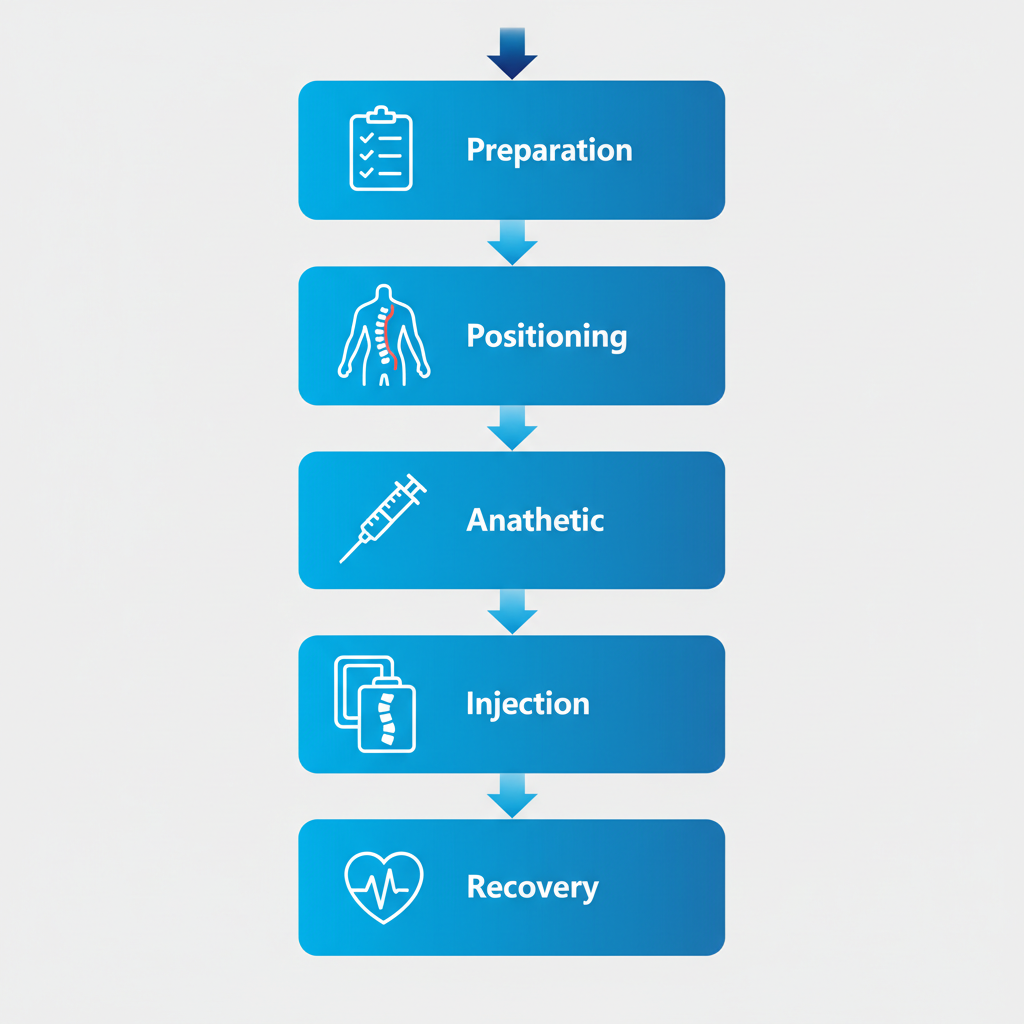
Illustrated process flow for back pain injection procedure steps
You might feel pressure during needle insertion or temporary warmth from the medication, but our team monitors you closely for comfort. These guided injection therapies locally emphasize precision, drawing from established standards to manage radicular pain effectively while minimizing risks like infection or bleeding.
Post-injection, we observe you briefly in recovery before discharge, ensuring no immediate issues arise. This hands-on spinal pain relief session concludes with personalized advice to maximize benefits.
Recovery and Aftercare Essentials
Recovery from your injection is straightforward, with most patients resuming light activities the same day. Initial relief often begins in 1 to 3 days as the anesthetic wears off, with full anti-inflammatory effects peaking in 1 to 2 weeks. We advise resting for the first 24 hours and applying ice to the injection site if soreness occurs.
To support healing, follow these guidelines:
| Activity | Recommendation | Timeline |
|---|---|---|
| Bathing | Shower Only (No Baths) | First 24 Hours |
| Exercise | Walking Moderate Distance | Day 2-3 |
| Work | Resume Non-Strenuous | Day 1-2 |
These restrictions, informed by clinical timelines for epidural procedures, prevent strain on the treated area and promote steady recovery. Monitoring for signs like severe headache, fever, or worsening pain is crucial–contact our team immediately if they appear, as they could indicate rare complications.
In addition to standard aftercare, we may recommend complementary options like facet joint injection therapy for joint-related pain contributing to your back issues. Avoid hot tubs or strenuous exercise initially, and track your symptom changes to discuss at follow-up. Our approach ensures you experience minimal downtime while achieving lasting relief through individualized pain treatment plans.
This comprehensive aftercare fosters confidence in your progress, bridging toward sustained wellness at Advanced Pain & Spine Management.
Advanced Considerations for Pain Injections
At Advanced Pain & Spine Management, we specialize in back pain injections in Arlington Heights, Illinois, offering advanced options for patients facing complex conditions like spinal stenosis. Our board-certified team employs cutting-edge techniques, such as fluoroscopy-guided procedures, to target pain sources precisely and improve outcomes in challenging cases. These enhanced spinal interventions go beyond basic relief, integrating evidence-based strategies to address radiculopathy and related symptoms effectively.
One key benefit lies in transforaminal epidural injections in Arlington Heights for spinal stenosis patients. These specialized nerve block therapies deliver medication directly to the affected nerve roots, reducing inflammation and alleviating leg pain more effectively than broader approaches. According to guidelines from the American Society of Interventional Pain Physicians, this precise targeting aligns with algorithmic protocols that stratify patients based on pain duration and prior conservative treatments, ensuring eligibility and safety. Patients often experience significant relief from neurogenic claudication, with symptoms like radiating discomfort improving shortly after the procedure. This method proves particularly valuable for those whose narrowing spinal canals compress nerves, as highlighted in studies on lumbar stenosis management, where targeted injections provide symptomatic relief alongside physical therapy.
Ideal candidates for these advanced injections include individuals with confirmed radiculopathy, verified through electromyography (EMG) testing. We prioritize patients who have not responded fully to initial therapies but show potential for interventional success. Recovery involves monitoring for temporary flare-ups in the first 48 hours, during which rest is essential. Patients can typically resume light activities within a few days, gradually increasing as guided by our follow-up protocols. We emphasize a phased return to normalcy, incorporating anti-inflammatory measures and activity modifications to optimize healing. Integration with complementary treatments, such as Botox for spasticity or knee joint injections therapy for comprehensive pain management, enhances overall results, especially in multifaceted chronic conditions.
Selecting the right clinic is crucial for advanced care. Key factors include the provider’s experience with complex cases, access to advanced technology, and convenient locations like our dual sites in Arlington Heights and Bloomingdale. Board-certified specialists ensure adherence to rigorous standards, while integrated follow-up ties injections to broader therapy plans.
The following table outlines selection criteria for advanced pain injection clinics:
| Criteria | Feature | Clinical Value |
|---|---|---|
| Technology | Real-time Fluoroscopy | Maximal Needle Precision |
| Exoerience | Board Certification | Highest Safety Standards |
| Continuity | Integrated Follow-up | Long-term Success |
Specialization matters because it directly impacts procedure accuracy and long-term efficacy. In our practice, fluoroscopy enables real-time visualization, reducing risks and enhancing precision as per interventional guidelines. Board certification guarantees expertise in patient stratification, while our coordinated follow-up, including nonsurgical therapies, supports sustained relief and prevents escalation to surgery. This structured approach, informed by lumbar stenosis research, helps patients achieve individualized pain treatment plans tailored to their needs.
Frequently Asked Questions on Back Pain Injections
At Advanced Pain & Spine Management, we specialize in back pain injections in Arlington Heights, Illinois, offering effective relief for conditions like sciatica and stenosis through our individualized pain treatment plans.
What are the main types of back pain injections?
We provide epidural steroid injections in Arlington Heights and transforaminal epidural injections in Arlington Heights, targeting inflammation around spinal nerves for precise pain relief.
How long does relief last from these injections?
Relief varies from 1 to 12 months, depending on the condition and patient response; we tailor follow-up care to extend benefits.
Are these injections covered by insurance?
Yes, most insurances cover back pain injections for diagnosed conditions like sciatica; our team verifies coverage during consultations.
What are the risks involved?
Risks are minimal with our protocols, including infection or temporary soreness; we follow FDA guidelines on epidural steroid injection monitoring to ensure safety.
How much do the procedures cost?
Costs depend on insurance and specifics, starting around $500 out-of-pocket; we discuss transparent pricing during your initial visit.
What should I expect during the procedure?
It’s an outpatient process lasting 15-30 minutes under local anesthesia; you can resume light activities soon after.
Where can I get these treatments locally?
Our Arlington Heights clinic offers convenient access to advanced options; contact us for customized care and appointments.
Results may vary; consult our specialists for personalized advice.
Next Steps in Your Pain Management Journey
At Advanced Pain & Spine Management, our back pain injections in Arlington Heights, Illinois, offer effective relief through minimally invasive options like epidural steroid injections in Arlington Heights and transforaminal epidural injections in Arlington Heights. These procedures, supported by evidence-based guidelines on spinal interventions, typically provide relief lasting weeks to months while integrating with nonsurgical therapies for comprehensive care. Our board-certified team delivers tailored local pain solutions at convenient locations.
Contact us today to schedule a consultation and explore personalized plans addressing sciatica, stenosis, and more, including broader options such as ankle injections. We collaborate on individualized pain treatment plans to optimize your ongoing spinal care strategies.
With our advanced treatments, patients often experience significant improvements in daily activities and quality of life. Embrace evidence-based management for a pain-free future.
Resources
Arlington Heights
IL
60005