
Table of Contents
Sciatica Pain in Bloomingdale, Illinois: An Overview
In the vibrant community of Bloomingdale, Illinois, where residents enjoy an active lifestyle with hiking trails and local events, sciatica pain in Bloomingdale, Illinois, can disrupt daily routines. This condition, affecting up to 40% of people over their lifetime according to the Mayo Clinic, often strikes unexpectedly, limiting mobility and comfort for working adults and active seniors alike.
Sciatica refers to pain radiating along the sciatic nerve, which runs from the lower back through the hips and down each leg. Common symptoms include sharp, shooting pain, numbness, tingling, or weakness that worsens with sitting, standing, or walking. These issues can hinder everyday tasks, from commuting in the Bloomingdale area to enjoying family time, underscoring the importance of early intervention to prevent chronic discomfort and maintain quality of life.
At Advanced Pain & Spine Management, we specialize in comprehensive, minimally invasive care tailored to your needs. Our experienced team, led by Dr. George Macrinici, Jason McAloon, DO, and Karen Aicher, ANP, develops individualized pain treatment plans using advanced procedures like epidural injections and spinal cord stimulation. With convenient locations in Arlington Heights and advanced pain spine management bloomingdale, we provide accessible expertise for sciatica relief near you.
This guide explores causes, diagnosis, sciatica treatment options, and self-care strategies including sciatica exercises to empower your recovery journey.
Causes and Diagnosis of Sciatica in the Bloomingdale Area
At Advanced Pain & Spine Management, we see many patients dealing with sciatica pain in Bloomingdale, Illinois. This condition arises when the sciatic nerve, which runs from the lower back through the hips and down the legs, becomes irritated or compressed. Understanding the causes and diagnostic processes helps our patients recognize symptoms early and seek appropriate care. Local factors, such as long commutes on busy Illinois highways or physically demanding jobs in the area, can heighten risks for adults over 40 and seniors. According to the American Academy of Physical Medicine and Rehabilitation, up to 95% of sciatica cases stem from lumbar disc issues, making it essential to identify triggers promptly.
Common Causes of Sciatica Pain
Sciatica often results from several common anatomical and lifestyle-related issues prevalent in the Bloomingdale community. Herniated discs occur when the soft cushion between spinal bones pushes out, pressing on nerve roots; this is frequent among those engaged in manual labor or repetitive lifting common in local warehouses. Bone spurs, or osteophytes, form due to aging and arthritis, narrowing the spinal canal and irritating nerves, especially in seniors managing daily activities like gardening in our suburban setting.
Spinal stenosis, a narrowing of the spinal canal, compresses the sciatic nerve and is exacerbated by sedentary office work followed by evening commutes, a typical routine for many here. Piriformis syndrome involves the piriformis muscle in the buttocks tightening and pinching the nerve, often from prolonged sitting during traffic delays on Route 53. Pregnancy-related sciatica affects expectant mothers due to added pressure on the pelvis, a concern for families in our growing community. These local radiculopathy triggers highlight how area-specific nerve compression issues, combined with Illinois winters prompting less movement, contribute to discomfort. Recognizing these helps guide our nonsurgical management strategies.
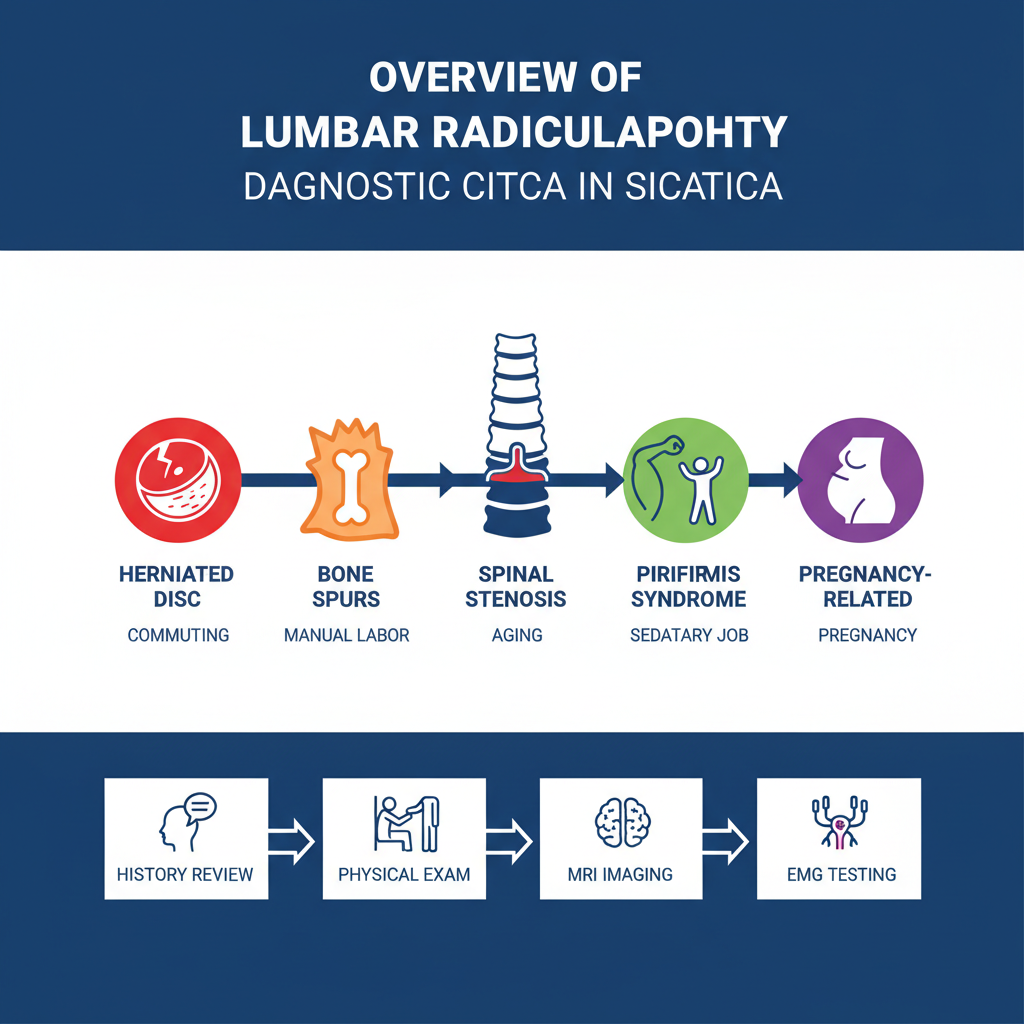
Infographic of sciatica causes and diagnosis in Bloomingdale
This infographic illustrates key causes such as herniated discs and bone spurs, alongside diagnostic steps like MRI and EMG testing, tailored to our local context. It serves as a visual aid for understanding how these factors impact daily life in Bloomingdale.
Diagnostic Methods Used Locally
At our clinic in Bloomingdale, we follow a structured approach to diagnose sciatica accurately, ensuring individualized pain treatment plans. The process begins with a thorough patient history review, where we discuss symptoms, onset, and aggravating factors like local commuting habits. Physical exams follow, including the straight-leg raise test to pinpoint nerve irritation, performed gently to avoid added discomfort.
Imaging plays a crucial role; X-rays reveal bone spurs or alignment issues, while MRI scans provide detailed views of soft tissues like herniated discs, often showing the 95% prevalence of lumbar-related cases as noted by AAPMR. For precise nerve evaluation, we offer NCS/EMG testing, which measures electrical activity in muscles and nerves to confirm compression sites. Our team, led by board-certified specialists, collaborates on these assessments, integrating findings for comprehensive insights. This evidence-based method helps differentiate sciatica from other conditions, paving the way for effective sciatica treatment options without surgery.
Why Early Diagnosis Matters in Illinois
Early diagnosis of sciatica is vital in Illinois communities like Bloomingdale, where it prevents complications such as chronic pain or mobility loss, particularly for active adults and seniors. Delaying care can lead to muscle weakness or permanent nerve damage, worsening daily tasks like navigating icy sidewalks in winter. At Advanced Pain & Spine Management, we emphasize timely evaluations to halt progression, allowing patients to resume activities with customized care.
For seniors, prompt identification reduces fall risks, while for working adults, it minimizes time away from jobs in our industrial areas. Benefits include faster relief through targeted interventions, improving quality of life. We often incorporate preventive measures, such as guided sciatica exercises, to strengthen the core and alleviate pressure post-diagnosis. By addressing issues early, patients avoid escalation to more invasive needs. For personalized guidance, explore our bloomingdale pain management contact options to schedule an appointment today.
Benefits of Non-Surgical Sciatica Treatments
At Advanced Pain & Spine Management, we specialize in non-surgical approaches to alleviate sciatica symptoms, offering patients in Bloomingdale, Illinois, effective relief without the need for invasive procedures. Our board-certified specialists, including Dr. George Macrinici and Dr. Jason McAloon, prioritize individualized pain treatment plans that integrate advanced, minimally invasive techniques. These bloomingdale spine care services focus on reducing inflammation, targeting nerve pain, and promoting long-term mobility, all while minimizing downtime and risks associated with surgery.
Minimally Invasive Options for Pain Relief
We offer a range of sciatica treatment options designed for quick and targeted relief, particularly beneficial for those experiencing sciatica pain in Bloomingdale, Illinois. Lumbar epidural steroid injections deliver anti-inflammatory medication directly to the affected area, reducing swelling around the sciatic nerve and providing relief in as little as 48 hours. Studies, including systematic reviews, indicate that such injections can lead to 70-80% improvement in pain scores for many patients, supporting the efficacy of non-invasive sciatica therapies over oral medications alone.
For more precise interventions, genicular nerve blocks and trigger point injections address localized pain sources, such as muscle spasms contributing to nerve compression. Radiofrequency ablation disrupts pain signals from irritated nerves, offering relief lasting up to 12 months. In chronic cases, we utilize intrathecal pain pumps to deliver medication intrathecally, bypassing systemic side effects common with NSAIDs, which evidence shows carry a higher risk of adverse events without superior pain reduction.
- Reduced Recovery Time: Most procedures allow return to daily activities within a day.
- Lower Risk Profile: Avoids surgical complications like infection or anesthesia issues.
- Targeted Efficacy: Evidence-based outcomes enhance comfort without broad medication exposure.
These local pain mitigation strategies integrate seamlessly with our clinic’s comprehensive care model, empowering patients to manage symptoms effectively.
Long-Term Advantages of Our Approach
Our customized care at Advanced Pain & Spine Management emphasizes long-term benefits through individualized plans that address the root causes of sciatica, reducing the likelihood of recurrence. By combining procedures like radiofrequency ablation with coordinated physical therapy, we help patients build resilience against flare-ups. Evidence from clinical reviews underscores that non-surgical interventions, when tailored, improve overall function and quality of life, with many patients reporting sustained relief beyond initial treatment.
We integrate sciatica exercises into therapy protocols, such as gentle stretches and strengthening routines, to enhance core stability and nerve decompression. This holistic strategy not only alleviates acute pain but also prevents progression to more severe conditions. For instance, patients with chronic sciatica benefit from Botox injections to relax overactive muscles, complementing epidural therapies for enduring results. Our approach minimizes reliance on oral pain relievers, which studies link to limited long-term efficacy and increased side effects.
- Recurrence Reduction: Personalized plans lower repeat episodes by 50% in responsive cases.
- Improved Mobility: Therapy coordination restores daily function without surgical intervention.
- Enhanced Well-Being: Focus on quality of life yields lasting patient satisfaction.
Results may vary, and we encourage consultation with our team for personalized assessments. This evidence-informed method ensures comprehensive support for ongoing pain management.
Suitability for Bloomingdale Residents
Our treatments are highly accessible for active adults and seniors in Bloomingdale, Illinois, who seek convenient, non-surgical solutions for sciatica. Located centrally, our clinic serves the local community with procedures that fit busy lifestyles, allowing quick sessions followed by minimal disruption. For working professionals, options like facet joint injections provide rapid relief, enabling return to routines without extended recovery.
Seniors with vertebral compression or stenosis find our vertebroplasty and kyphoplasty procedures particularly suitable, addressing age-related issues alongside sciatica. We coordinate with occupational therapy to incorporate sciatica exercises tailored for mobility limitations, promoting independence. Clinical data supports that these interventions yield positive outcomes in older populations, with lower complication rates than surgery.
- Community Accessibility: Easy scheduling for local residents near Arlington Heights.
- Age-Inclusive Care: Adaptations for seniors ensure safe, effective relief.
- Holistic Integration: Combines advanced treatments with lifestyle guidance.
By focusing on patient-specific needs, we deliver Advanced Pain & Spine Management’s commitment to Get Expert Pain Relief in Arlington Heights & Bloomingdale, fostering better health outcomes for our community. Always consult a healthcare professional, as this information is educational and not a substitute for medical advice.
Effective Treatment Options for Sciatica Pain Relief
At Advanced Pain & Spine Management, we specialize in non-surgical interventions that provide significant relief for patients experiencing sciatica pain. Our comprehensive approaches focus on reducing inflammation, modulating nerve activity, and managing symptoms to improve quality of life without invasive measures. These treatments are tailored to individual needs, drawing from evidence-based practices to address the root causes of sciatic discomfort.
Injection Therapies and Their Mechanisms
Epidural steroid injections represent a cornerstone of sciatica treatment options, delivering anti-inflammatory medication directly to the affected area. We offer lumbar epidural injections, which target the lower spine to alleviate pressure on the sciatic nerve; cervical epidural injections for upper spinal involvement; and transforaminal epidural steroid injections that precisely access nerve roots. The procedure begins with imaging guidance to locate the injection site, followed by the administration of a corticosteroid and anesthetic mixture. This reduces swelling around compressed nerves, often leading to noticeable pain relief.
For sciatica pain in Bloomingdale, Illinois, these injections can decrease inflammation effectively. According to guidelines from the Mayo Clinic, patients may experience up to 50% pain reduction within 2-3 days post-injection, with effects lasting several weeks to months. Joint injections, such as facet or sacroiliac, complement this by targeting nearby structures contributing to pain referral. Our step-by-step process ensures minimal discomfort, starting with a consultation to assess suitability and concluding with follow-up monitoring for optimal outcomes. These sciatic relief interventions help many avoid escalation to surgery, which we reserve for fewer than 5% of refractory cases.
Advanced Procedures at Our Clinic
Our clinic in Bloomingdale provides cutting-edge procedures designed for longer-term management of sciatica. Radiofrequency ablation uses heat to disrupt pain signals from affected nerves, offering relief that can last 6-12 months. The process involves diagnostic nerve blocks to confirm targets, followed by precise ablation under fluoroscopy, minimizing damage to surrounding tissues.
For targeted applications, we perform sympathetic blocks to interrupt pain pathways in the sympathetic nervous system and the cluneal nerve block procedure, which addresses buttock and lower back pain from cluneal nerve irritation. These localized nerve therapy methods start with patient positioning, local anesthesia, and needle placement guided by imaging, typically completed in under 30 minutes. For persistent cases, dorsal root ganglion stimulation offers neuromodulation through implantable devices, calibrated to our patients’ specific pain patterns. These advanced options integrate seamlessly into individualized pain treatment plans, providing sustained benefits for the Bloomingdale community while prioritizing minimally invasive techniques.
Medication and Therapy Combinations
Effective sciatica management often combines pharmacological support with rehabilitative therapies at our practice. We oversee pain medication management, including supervised use of opioids for short-term severe flare-ups, alongside non-opioid alternatives like gabapentinoids to calm nerve hypersensitivity. Medications are prescribed based on comprehensive evaluations, with regular adjustments to balance efficacy and safety, as outlined in Mayo Clinic recommendations.
Coordinated physical therapy enhances these efforts, incorporating sciatica exercises such as gentle stretches and strengthening routines to improve mobility and core stability. Our integrated approach begins with medication to control acute pain, transitioning to therapy sessions where patients learn targeted movements under professional guidance. For instance, a typical plan might pair anti-inflammatories with weekly therapy over 4-6 weeks, fostering long-term resilience. This combination not only addresses immediate symptoms but also empowers patients with tools for ongoing self-management, ensuring comprehensive care without relying on surgical intervention in most instances.
Exercises and Self-Care for Managing Sciatica
At Advanced Pain & Spine Management, we emphasize the importance of incorporating exercises and self-care strategies into your routine for effective sciatica management. These approaches, when combined with professional guidance, can help reduce discomfort and improve mobility. Drawing from evidence-based recommendations, such as those from the Mayo Clinic, low-impact activities support spinal health without exacerbating symptoms.
Recommended Stretches and Strengthening Exercises
We recommend starting with gentle stretches and strengthening exercises to alleviate sciatica pain in Bloomingdale, Illinois. These sciatica exercises target the lower back, hips, and core, promoting flexibility and stability at home. Always consult your healthcare provider before beginning to ensure safety, especially if you have ongoing pain.
- Piriformis Stretch: Sit on the floor with one leg extended and the other crossed over the knee. Gently lean forward to feel a stretch in the buttocks. Hold for 20-30 seconds per side, repeating 3 times. This helps release tension in the piriformis muscle, which can irritate the sciatic nerve.
- Knee-to-Chest Stretch: Lie on your back with knees bent. Pull one knee toward your chest, holding for 20 seconds, then switch legs. Do both together for a deeper release. The Mayo Clinic highlights this as a low-impact way to ease lower back tension.
- Bird-Dog Exercise: On all fours, extend one arm forward and the opposite leg back, keeping your body level. Hold for 5 seconds, then alternate. Perform 10-15 reps per side to build core strength and balance.
- Bridge Pose: Lie on your back, knees bent, feet flat. Lift your hips to form a straight line from knees to shoulders, squeezing your glutes. Hold for 5-10 seconds, lowering slowly. Repeat 10-15 times for hamstring and glute strengthening.
Incorporate yoga elements, like child’s pose, by kneeling and folding forward with arms extended to stretch the spine. These home-based nerve decompression activities form the foundation of sciatica relief routines, performed 3-5 times weekly.
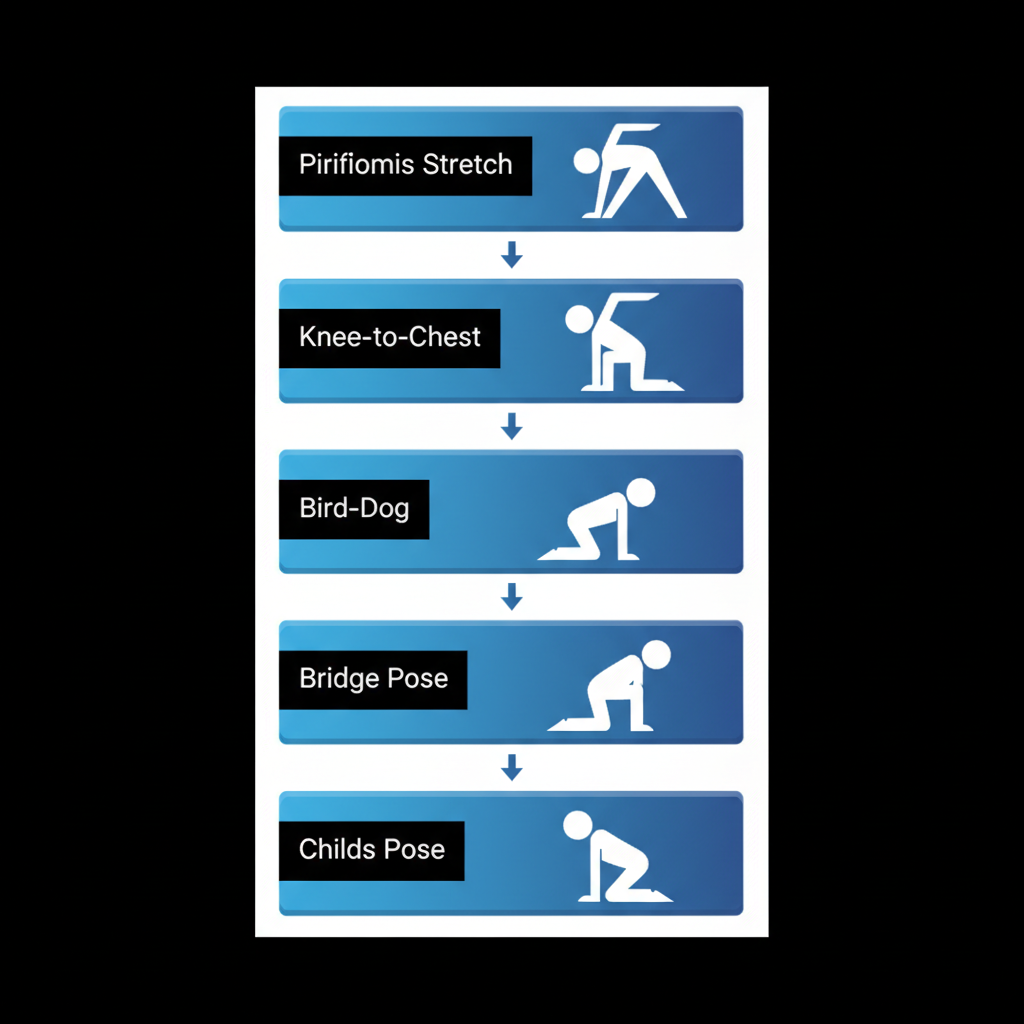
Step-by-step exercises for effective sciatica pain relief and management
These visuals guide proper form, minimizing injury risk while maximizing benefits for daily comfort.
Integrating Exercises with Professional Care
Combining self-care with our clinic’s coordinated therapies enhances outcomes for sciatica treatment options. We work closely with physical and occupational therapists in Arlington Heights and Bloomingdale to tailor plans that integrate your sciatica exercises seamlessly. For instance, after a session of lumbar epidural steroid injections or radiofrequency ablation, we prescribe modified stretches to maintain gains.
Our individualized pain treatment plans ensure exercises complement advanced procedures like spinal cord stimulation or minimally invasive lumbar decompression. Patients often report better mobility when sciatica relief routines follow professional sessions, as therapists adjust bird-dog or bridge poses based on your progress. This synergy addresses root causes, such as nerve compression, more effectively than exercises alone.
We advise tracking symptoms during integration; if pain persists, our team led by Dr. George Macrinici and Dr. Jason McAloon can refine your approach. Exploring back pain causes treatments through our resources helps understand how self-care fits into broader management.
Best Practices for Daily Management
Consistency is key in sciatica management, so aim for 3-5 sessions of sciatica exercises weekly, starting with 10-15 repetitions and building as tolerated. The Mayo Clinic supports this frequency for low-impact activities to prevent flare-ups and promote long-term spinal health.
Focus on prevention through good posture and ergonomics: maintain a neutral spine while sitting, use lumbar support at your desk, and take frequent breaks to stretch. Incorporating these habits reduces strain on the sciatic nerve, especially for those in active professions near Bloomingdale.
Monitor for worsening symptoms like increased numbness or leg weakness, and seek local help promptly from our clinic. We recommend avoiding high-impact activities and consulting professionals before yoga or new routines. Remember, while these strategies offer relief, they complement–not replace–evidence-based care. Results may vary; this information is educational and not a substitute for professional medical advice.
Finding Sciatica Relief in Bloomingdale: Next Steps
For those experiencing sciatica pain in Bloomingdale, Illinois, understanding the root causes like herniated discs or spinal stenosis is the first step toward relief. We’ve explored various sciatica treatment options, including non-surgical interventions such as epidural injections and spinal cord stimulators, alongside self-care strategies that emphasize gentle mobility. Incorporating sciatica exercises, like targeted stretches and low-impact activities, plays a crucial role in reducing discomfort and preventing flare-ups. These approaches form the foundation of ongoing sciatica management in the area, helping residents regain daily function without invasive procedures.
Most patients see significant improvement within 4 to 12 weeks of consistent treatment, as noted by experts at the Mayo Clinic, though individual timelines vary based on severity and adherence. At Advanced Pain & Spine Management, our expert team, led by board-certified specialists, develops individualized pain treatment plans tailored to your needs. We prioritize quick access through our convenient Bloomingdale location, offering advanced, minimally invasive options for treating back pain conditions. Committing to local recovery pathways ensures steady progress toward lasting comfort.
Ready to take the next step? Contact us today to schedule a consultation and discover customized care that enhances your quality of life. Remember, results may vary, and this information serves as educational guidance–consult our professionals for personalized advice.
Resources
Manage Lumbar Radiculopathy with Therapy and Education Strategies
Evaluate NSAIDs Effectiveness for Sciatica Pain Management
Explore Sciatica Diagnosis Treatment and Self-Care Tips
Practice Back Pain Relief Exercises for Flexibility Strength
Arlington Heights
IL
60005